

Imagine a CTO leaning back after another failed interview and saying quietly, “We’ve wasted six weeks and I still don’t have the right person.”
The HR lead nods, frustrated: “Every résumé looks the same. How do we know who can actually do the job?”
We often hear versions of that exchange. It’s what happens when assumptions about permanent recruitment replace a clear process.
Permanent recruitment is here to stay, but misconceptions about how it works still influence the way many companies make hiring decisions. Some of these myths come from poor experiences with agencies, while others are simply a lack of understanding. What they all have in common is that they prevent teams from seeing how a modern, success-based model works. For companies looking to build stable delivery teams, permanent recruiting is often the difference between a role filled quickly and months of vacancy.
At STACK IT, we hear these myths every week in conversations with CTOs, HR leads, and founders. Below are five of the most common, and why they don’t hold up in practice.
Myth #1 – Permanent Recruitment Is Just Resume Sourcing
This misconception comes from firms that treated the volume of candidates as a success metric. They submitted as many resumes as possible, hoping one would stand out. Companies burned by that approach assume all permanent recruiters operate the same way.
STACK IT works differently. Every role gets a custom intake and interview guide. Candidates are screened through live scenario prompts, project retrospectives, and cultural alignment questions. We don’t send a profile unless we can explain how the person matches the role’s technical requirements and the team’s working style. Quality control is built into the process.
When companies fall for this myth: We’ve seen hiring managers spend weeks re‑interviewing poorly screened candidates because the staffing company kept sending resumes after resumes. In one case, the search had to be restarted from scratch after five weeks of wasted effort. Once we stepped in, the intake was corrected, and the right shortlist was delivered within days.
Quality over quantity.
Permanent Recruitment Myth #2 – It’s Too Expensive & High Risk
The idea that permanent recruitment carries high financial risk often stems from a misunderstanding of how the model works. In a success-based search, clients don’t pay unless a hire starts their first day. There are no upfront fees or retainers. That means the cost is directly tied to a successful outcome.
And when you compare that to the cost of a bad hire, which averaged $14,900 in 2024, with a typical time-to-fill of 44 days and a per-hire cost over $4,700, the real risk isn’t using a recruiter, it’s doing it wrong internally.
STACK IT strengthens this model further by staying involved through offer framing and compensation storytelling. If the base salary isn’t the highest, we help highlight total compensation and career growth opportunities. This prevents late-stage drop-offs and gives hiring managers more leverage in closing the right candidate.
When companies fall for this myth: We’ve spoken with HR teams that avoided permanent recruitment because they assumed they’d be billed regardless of outcome. As a result, they lost months running their search and eventually came back after internal efforts failed. By then, their hiring timeline had doubled.
Comparison: Contingency vs. Success-Based Permanent Recruiting
Contingency vs. Success-Based Permanent Recruiting
How outdated contingency models stack up against STACK IT’s success-based approach.
| Aspect | Outdated Contingency Model | STACK IT Success-Based Model |
|---|---|---|
| Payment | Retainers or upfront fees | Pay only if a hire starts |
| Candidate Delivery | Resume volume, low screening | Structured vetting, tailored shortlists |
| Risk | Costs incurred even without a hire | Costs tied directly to successful placement |
| Screening Quality | Shallow, keyword-driven | Scenario-based, technical and cultural evaluation |
For example, we’ve seen this play out when a company avoided outside help due to cost concerns, only to lose months of output while struggling internally. By the time they circled back, the impact of vacancy costs had far outweighed any recruiting fee. In cases like hiring an AI engineer, each week without a filled role means delayed features and lost delivery time.
Myth #3 – Recruiters Can’t Screen for Technical Depth
Technical leaders often worry that external recruiters cannot distinguish between someone who lists a language on a resume and someone who has used it in a production environment. That concern is valid in many markets, but it doesn’t reflect how STACK IT operates.
Our recruiters come prepared with role-specific interview guides and layered questions. We ask candidates to explain their work in plain terms, walk through project decisions, and describe outcomes in context. We also apply the same evaluation standards to permanent hires as we do to contract roles. That consistency means technical depth is never compromised.
When companies fall for this myth: A scaling product company once interviewed four candidates from another agency who could name industry tools but couldn’t explain how they used them. The hiring manager lost confidence in outside support until STACK IT took over the search and sent two candidates who could walk through real-world decisions. One of them is still leading their engineering team today. For companies unsure about compensation ranges in competitive roles, our recruitment salary guide can help set realistic expectations.
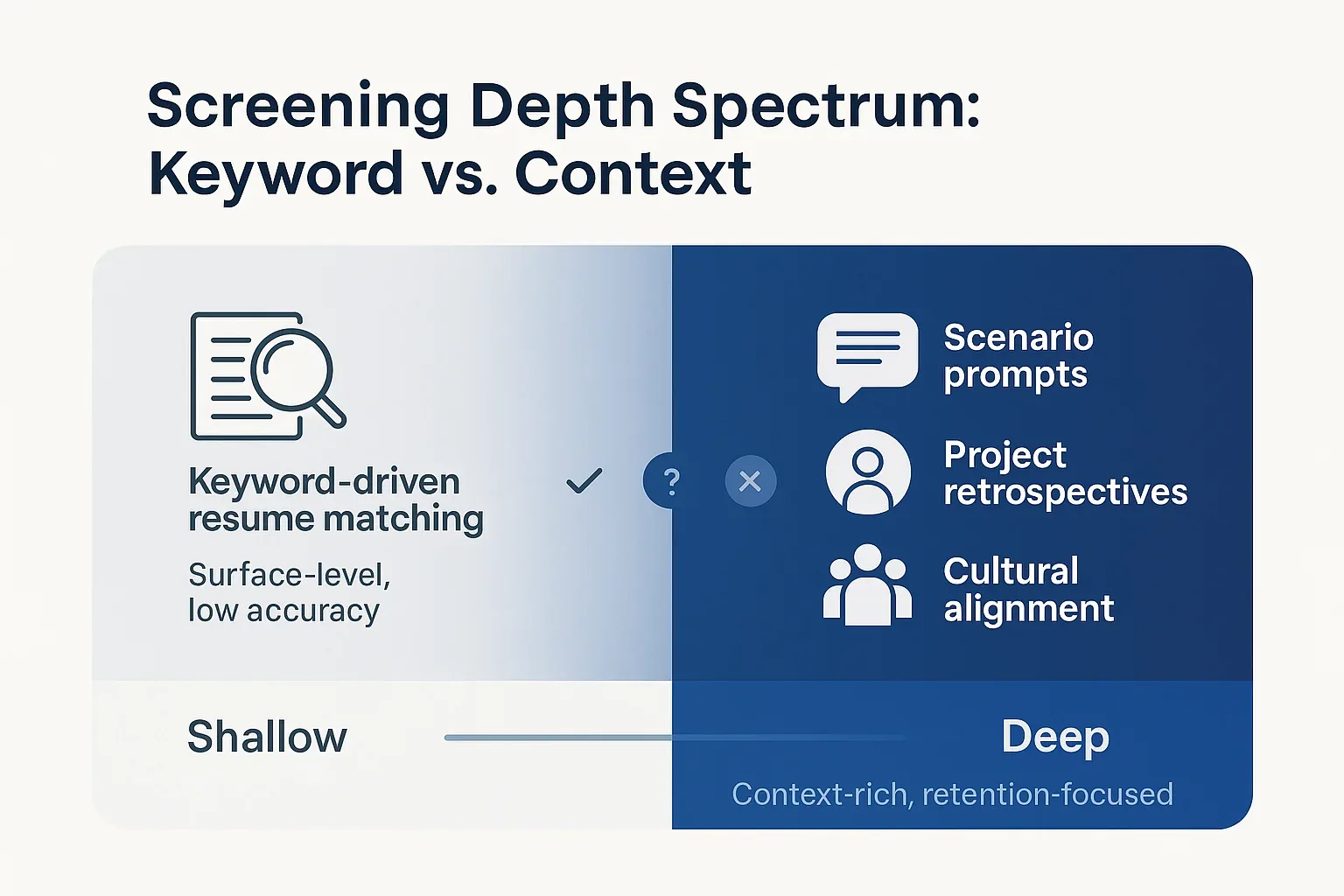
Myth #4 – Permanent Recruitment Takes Too Long
Many teams assume permanent searches drag on because they’ve seen agencies cycle through unqualified resumes for weeks. In reality, the delay comes from a poor system, not from the model itself.
STACK IT typically submits the first candidates within days. If the first round doesn’t hit the mark, we stop, review feedback, and adjust the search before sending more.
Sara Pietrangelo, Recruitment Manager @ STACK IT, explains it best: “If early candidates don’t fit, we pause and realign instead of doubling down. We take the time so that our clients don’t have to.” The focus is on selecting the right shortlist to save the client valuable time.
When companies fall for this myth: One client delayed using outside help because they thought it would take months. After trying to source themselves for nearly two months, they partnered with STACK IT. Within a week, we provided three candidates, and one was hired within the month. In roles like an IT Manager for hire, waiting too long can leave infrastructure unsupported and teams without leadership. To see the impact in numbers, our cost of delaying a hire calculator makes the expense clear.
Myth #5 – Cultural Fit Is Secondary to Technical Skills
It’s common for hiring teams to assume that if the technical skills are strong, everything else will fall into place. But cultural fit is one of the strongest predictors of retention. When someone isn’t a fan of how the team collaborates, adapts to change, or plans for long‑term growth, they often leave within a few months.
STACK IT screens for cultural fit as closely as we do for technical depth.
We ask about how candidates work with peers, adapt to shifting priorities, and see themselves growing inside the team. This step reduces the risk of turnover and helps clients build teams that are more stable and lasting.
As JT Lalli, Founder @ STACK IT, often reminds clients, cultural fit has significant weight on candidacy, and it’s often what determines whether someone stays and grows with the team. According to Gallup’s 2024 research, replacing a professional in a technical role can cost about 80% of that employee’s salary. That underscores the high cost of cultural misalignment or poor hiring decisions, which can result in high turnover rates.
When companies fall for this myth: We’ve seen technically strong hires walk out the door during their probation period because they couldn’t adapt to the team’s way of working. That turnover meant repeating the entire search. By addressing cultural fit upfront, we help clients avoid paying for the same role twice. For further context on what derails permanent hires, see our post on tech hiring mistakes.
Rethinking Permanent Recruitment
Permanent recruitment isn’t outdated. The myths that surround it are. Companies that dismiss it outright miss out on a model that, when handled with focus and context, shortens searches, reduces hiring risk, and builds stronger teams.
STACK IT proves this every day by combining technical evaluation with cultural screening and a success-based fee model. What makes this effective isn’t the pricing model, it’s how the process is applied.